By Shri School of Dance
In today’s fast-paced digital world, parents and educators are increasingly searching for activities that nurture not only talent, but also emotional intelligence, focus, discipline, and brain development. Among the most powerful yet often underestimated tools for neurological growth are classical dance and music.
Whether it is Bharatanatyam, Kathak, Carnatic music, Hindustani vocals, violin, or mridangam, Indian classical arts are far more than performance traditions—they are holistic systems that engage the brain, body, emotions, and senses simultaneously.
The Brain Behind the Art
Neurological development refers to how the brain grows, forms connections, and improves functions such as memory, coordination, emotional regulation, language, creativity, and problem-solving. Activities that stimulate multiple regions of the brain strengthen these neural pathways, especially during childhood.
Classical dance and music uniquely activate:
- Motor cortex – through movement and coordination
- Auditory cortex – through rhythm, melody, and listening
- Memory centers – by learning compositions, sequences, and expressions
- Emotional centers – through storytelling and rasa (emotion)
- Executive functioning – through discipline, attention, and practice
Unlike passive learning, these art forms demand active engagement of the entire nervous system.
Rhythm and Brain Connectivity
Rhythm is one of the most powerful organizers of the human brain. Repeating rhythmic patterns in dance footwork or musical training improves timing, sequencing, and coordination between the left and right hemispheres of the brain.
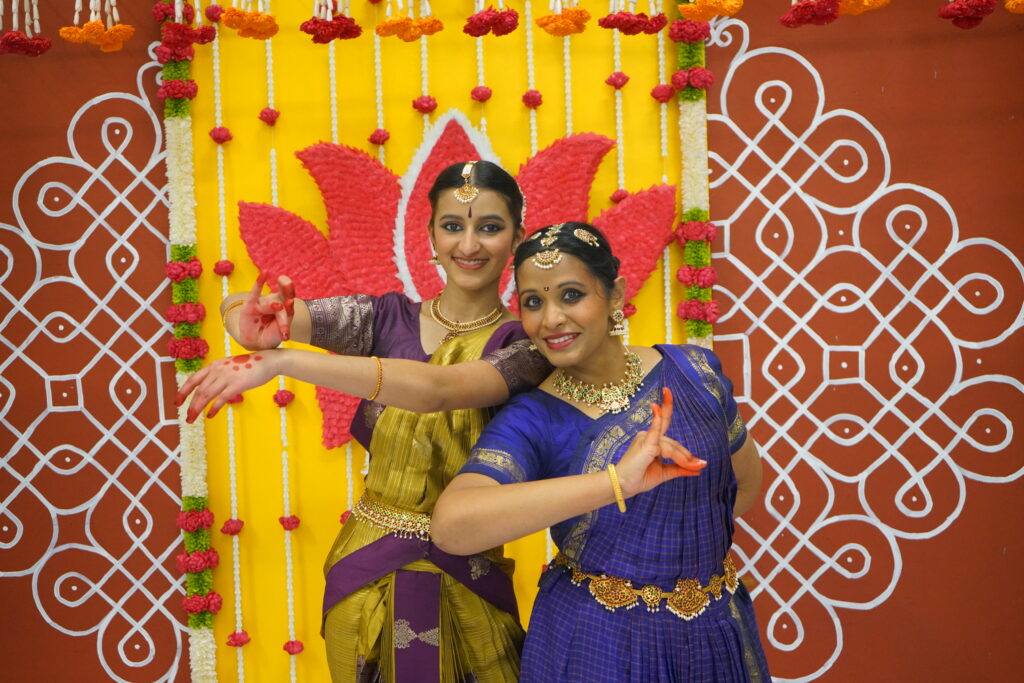
In Bharatanatyam, for example, dancers simultaneously:
- remember choreography,
- maintain tala (rhythm),
- coordinate hand gestures,
- express emotions through facial expressions,
- and synchronize body movement with music.
This level of multitasking strengthens cognitive flexibility and neural integration.
Enhancing Memory and Concentration
Learning classical compositions requires repetition, precision, and sustained attention. Children who engage in regular dance or music practice often demonstrate improvements in:
- concentration,
- working memory,
- listening skills,
- and academic discipline.
The structured nature of classical training teaches the brain to focus deeply over longer periods—an increasingly rare skill in the age of short attention spans.
Emotional Regulation and Expression
One of the most remarkable aspects of classical arts is their emotional depth. Through abhinaya (expressive storytelling), music, and movement, students learn to identify, process, and communicate emotions in healthy ways.
This emotional engagement supports:
- self-awareness,
- empathy,
- confidence,
- and stress reduction.
Many therapists and educators are now exploring rhythm and movement-based interventions for children with developmental and emotional challenges.
Benefits for Neurodivergent Children
Emerging observations and studies suggest that structured movement and music can positively support children with autism spectrum disorder, ADHD, sensory processing challenges, and anxiety.
Classical dance and music may help improve:
- sensory integration,
- eye contact and social engagement,
- body awareness,
- routine-building,
- and emotional expression.
The repetitive patterns, rhythmic predictability, and expressive nature of these art forms create a safe and engaging learning environment for many neurodivergent children.
More Than an Art Form
Indian classical traditions were never designed merely for entertainment. They were systems of discipline, mindfulness, storytelling, spirituality, and human development. The combination of movement, rhythm, breath, expression, and devotion creates a deeply immersive neurological experience.
When a child learns classical dance or music, they are not just learning steps or notes—they are building:
- resilience,
- patience,
- emotional intelligence,
- cultural identity,
- and cognitive strength.
Conclusion
Science is increasingly validating what traditional cultures have long understood: music and movement shape the human mind in profound ways. Classical dance and music are not extracurricular luxuries; they are powerful developmental tools that nurture the brain, emotions, and spirit together.
In a world searching for holistic approaches to child development and well-being, classical arts may hold some of the answers we have been overlooking all along.
Leave a Reply